Read Less. Know More.

The key ideas from every book worth reading

Book summaries that save hours and sharpen decisions.

Get concise, well-crafted summaries from the world's best nonfiction books. Read the core ideas in minutes, then decide what deserves a deeper dive.

Start Free Trial What is BookScribe?
7-day free trial, then $15/month
Leadership · Business

Leaders Eat Last Summary

The best leaders build a Circle of Safety around their people, sacrificing their own comfort so that every member of the team feels safe enough to do their best work.

⏱ 9 min read 📖 Simon Sinek · 2014 ⭐ 4.6/5 · 50K+ ratings 📦 1M+ copies sold
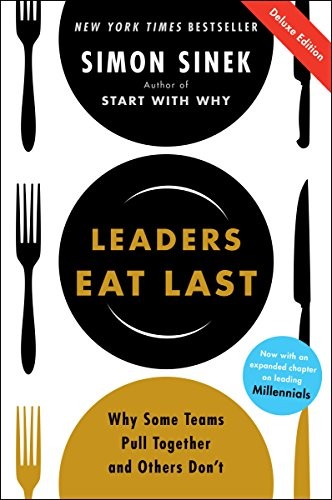
Leaders Eat Last by Simon Sinek

Leaders Eat Last

By Simon Sinek
National Bestseller 📅 2014 ⏳ 368 pages
📦 Buy on Amazon →

The One-Sentence Version

The best leaders build a Circle of Safety around their people, sacrificing their own comfort so that every member of the team feels safe enough to do their best work.

The Core Idea

Simon Sinek's title comes from a Marine Corps tradition: officers eat last in the chow line. It is not a rule, it is a cultural norm, a visible signal that leadership means putting the team first. Sinek's central argument is that the best organizations are ones where people feel psychologically safe, where they trust that the leaders will protect them from external threats rather than create internal ones. That safety is not soft. It is the precondition for extraordinary performance.

The true price of leadership is the willingness to place the needs of others above your own.

Sinek grounds his arguments in biology, looking at how the chemicals dopamine, serotonin, oxytocin, and cortisol shape behavior in organizations. Short-termism driven by dopamine rewards creates the kind of culture where everyone is watching their back. Cultures built on the slower, harder chemicals, serotonin and oxytocin, which flow from trust and connection, produce teams that take risks for each other and sustain performance over time.

Key Takeaways

1
The Circle of Safety - When people feel safe inside the group, all of their energy can be directed outward toward real competition and real challenges. When they feel unsafe inside the group, their energy goes toward self-protection. Leaders define the size of the Circle of Safety by what they will and will not tolerate.
2
Cortisol destroys trust - Cortisol, the stress hormone, is meant for short-term physical threats. In organizations with poor leadership, it is chronically elevated from fear of judgment, job loss, or humiliation. Chronic cortisol suppresses the immune system, inhibits creativity, and destroys collaboration.
3
Abstract kills empathy - Sinek argues that when companies grow large and employees become numbers on spreadsheets, leaders lose the ability to empathize. The people affected by decisions become abstract. This is not moral failure so much as a structural one, and recognizing it is the first step to correcting it.
4
Leadership is a choice - Leadership is not a rank or a title. It is a decision to look after the person to your left and right. Sinek argues that this choice, made consistently, is what separates managers from people others want to follow.

The Destructive Abundance and How Leaders Restore Balance

Sinek's most challenging chapters examine what happens when the chemicals of abstraction and short-term reward dominate an organization. He then lays out exactly what leaders must do differently to restore the biological conditions for trust...

🔒

Read the Full Summary

Get the complete Leaders Eat Last breakdown plus a new summary delivered to your inbox every week.

Start free · Then $15 / month
Start 7-Day Free Trial
No credit card required · Cancel anytime