Read Less. Know More.
The key ideas from every book worth reading
Book summaries that save hours and sharpen decisions.
Get concise, well-crafted summaries from the world's best nonfiction books. Read the core ideas in minutes, then decide what deserves a deeper dive.
7-day free trial, then $15/month
The One-Sentence Version
Pesticides are silently poisoning the food chain, and the industries selling them have hidden this truth from the public for decades.
The Core Idea
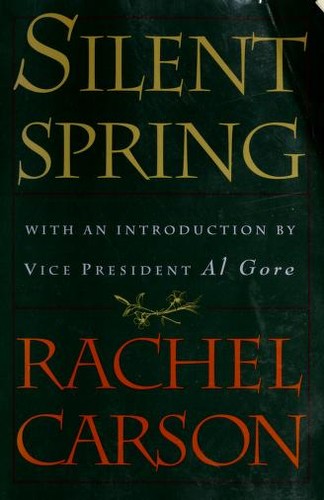
Published in 1962, Silent Spring opened with a fable: a town in America where birds no longer sang in spring. All the elms had been sprayed with DDT to kill beetles. The robins ate the earthworms that absorbed the dead beetles. The robins died. Carson was not writing fiction. She was describing what was already happening across the country, documented in case studies she spent four years assembling.
The question is whether any civilization can wage relentless war on life without destroying itself.
Carson's argument was meticulous and devastating. Chemical companies had sold pesticides as miracle solutions to crop pests. But these chemicals were not selective. They killed everything they touched, contaminated groundwater, accumulated in fatty tissue, and moved up the food chain. DDT sprayed on elm trees ended up inside the eggs of bald eagles, thinning the shells until the eggs could not hatch.
Key Takeaways
1
The food chain amplifies poison - A pesticide sprayed on a field at low concentration becomes far more concentrated in the insects that eat the treated plants, then more concentrated still in the birds that eat those insects, then most concentrated of all in predators at the top. This is biomagnification, and it means no dose is truly safe at every level.
2
Industry obscures what it does not want known - Carson documented how chemical companies funded research that minimized dangers, pressured government regulators, and publicly attacked scientists who challenged their products. She named this behavior, documented it, and held it up for public inspection. The pattern she described has been recognized many times since.
3
Nature is a system, not a collection of parts - When you kill one species, you disrupt the balance that species maintained. Spraying for gypsy moths destroyed the predators that kept other pest populations in check, producing worse outbreaks the following year. Every intervention has second-order effects that chemical companies were not advertising.
4
Citizens have a right to know what enters their environment - People were not told they were being exposed to pesticides. Carson argued this was a form of involuntary poisoning. The right to informed consent applied to environmental contamination just as it applied to medical treatment. This argument shaped environmental law for generations.
The Science Behind the Silence
Carson documented seventeen specific chemical families with detailed evidence of their biological effects. She explained how organochlorines like DDT disrupted enzyme production, interfered with hormone systems, and persisted in soil and water for years after application...
🔒
Read the Full Summary
Get the complete Silent Spring breakdown plus a new summary delivered to your inbox every week.
- Full breakdown - every framework and key idea
- New summaries delivered weekly, no effort required
- On-demand access - any book, any time
- PDF download on every summary
- Cancel anytime
Start free · Then $15 / month
Start 7-Day Free Trial
No credit card required · Cancel anytime